MIS System in Development Projects: Complete Guide (2026)
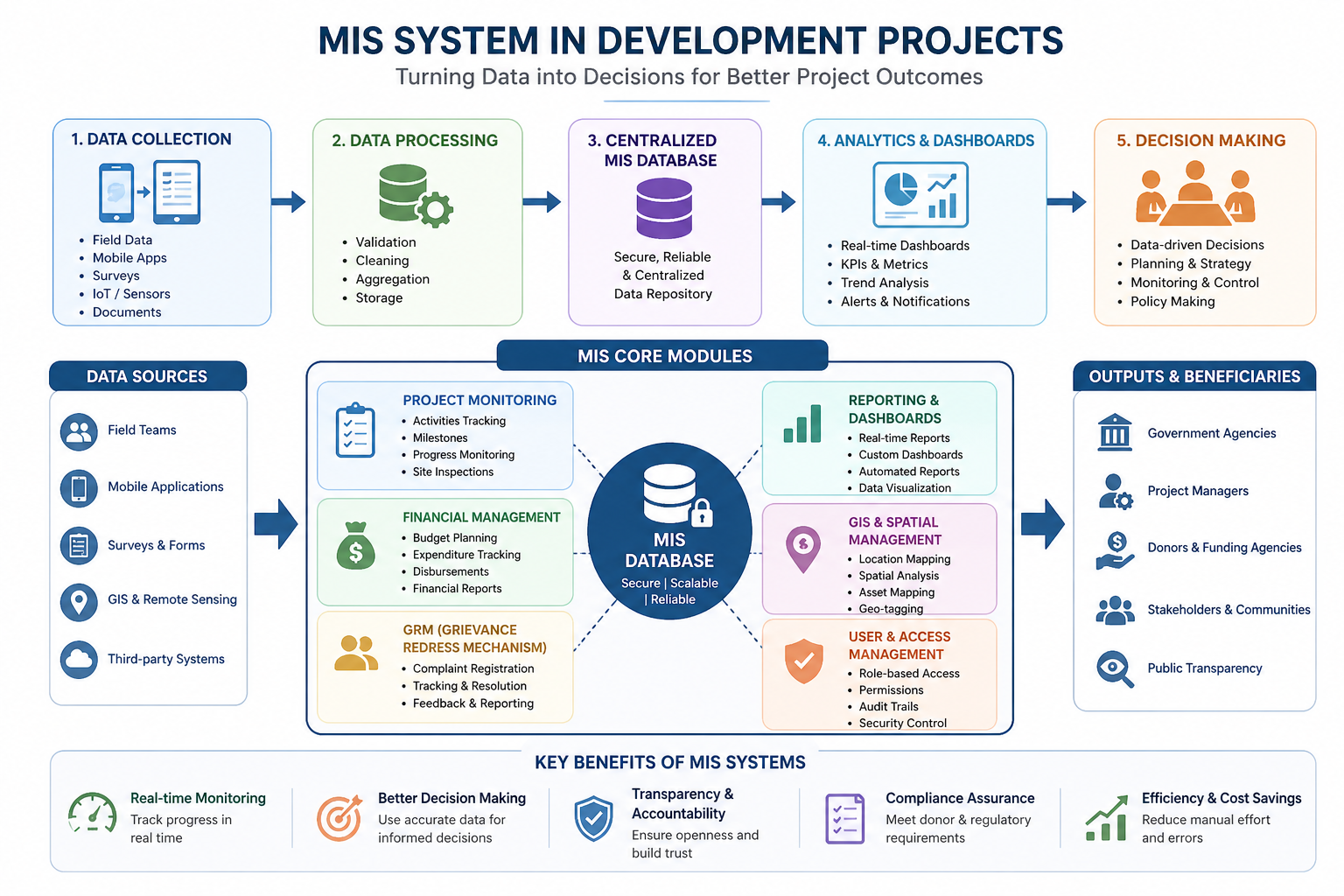
A Management Information System (MIS) is a centralized digital platform used to collect, manage, analyze, and report data across development and infrastructure projects. It enables organizations to monitor progress, improve transparency, and make data-driven decisions in real time.
Simple Understanding: MIS = Data Collection + Monitoring + Reporting + Decision Support
In government and donor-funded projects, MIS systems are not just operational tools—they are critical for compliance, accountability, and performance tracking.
What is an MIS System?
An MIS system is a structured information management framework that integrates project data from multiple sources into a single platform. It provides real-time visibility into project performance, financials, and operational activities.
In development projects, MIS systems are widely used for project monitoring, reporting, and decision-making, especially in infrastructure, construction, and public sector programs.
Why MIS Systems Are Essential in Development Projects
Development and infrastructure projects involve multiple stakeholders, field operations, and strict reporting requirements. Without a digital MIS system, managing this complexity becomes inefficient and error-prone.
Key Modules of an MIS System
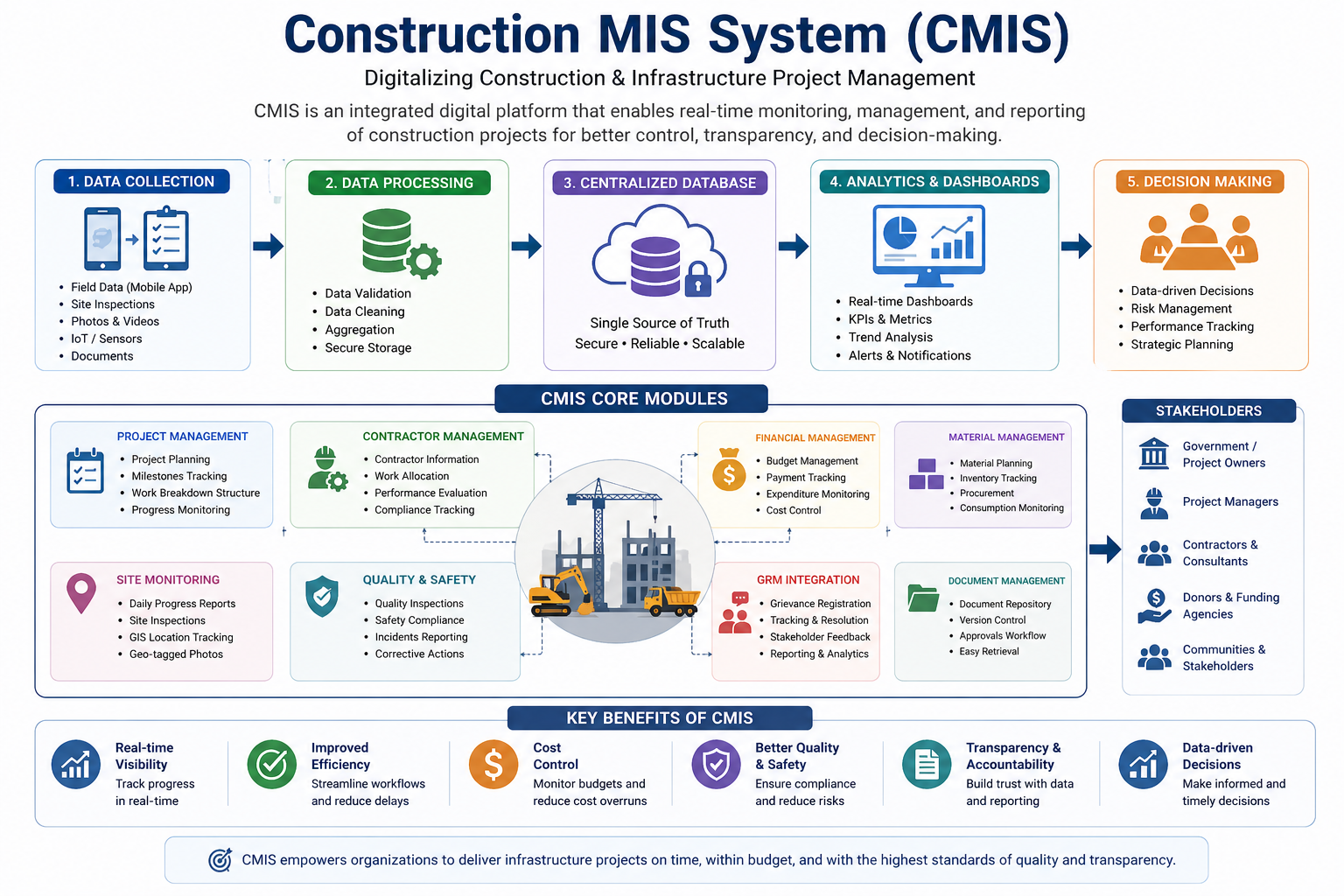
A modern MIS system is composed of multiple integrated modules that work together to manage the entire project lifecycle.
1. Project Monitoring Module
Tracks physical progress, milestones, and field activities in real time.
2. Financial Management Module
Manages budgets, expenditures, and financial reporting.
3. GRM (Grievance Management System)
Handles complaints, feedback, and stakeholder engagement—ensuring transparency and accountability.
4. MIS Dashboard & Reporting
Provides real-time analytics, KPIs, and visual reports for decision-makers.
5. GIS & Field Data Integration
Maps project locations and enables geo-based monitoring of activities.
Benefits of MIS Systems
- Real-time visibility into project performance
- Improved decision-making through accurate data
- Reduction in manual errors and reporting delays
- Enhanced transparency across stakeholders
- Better compliance with donor and regulatory requirements
MIS vs Traditional Reporting Systems
| Traditional Systems | MIS System |
|---|---|
| Manual data entry | Automated data capture |
| Delayed reporting | Real-time dashboards |
| High error risk | Validated & accurate data |
Conclusion
An MIS system is the backbone of modern development and infrastructure projects. It transforms scattered data into actionable insights, enabling organizations to deliver projects efficiently, transparently, and in full compliance with donor and government requirements.
Looking for MIS Consulting or Development?
We design scalable MIS systems tailored for government, NGOs, and infrastructure projects.
Explore MIS Solutions