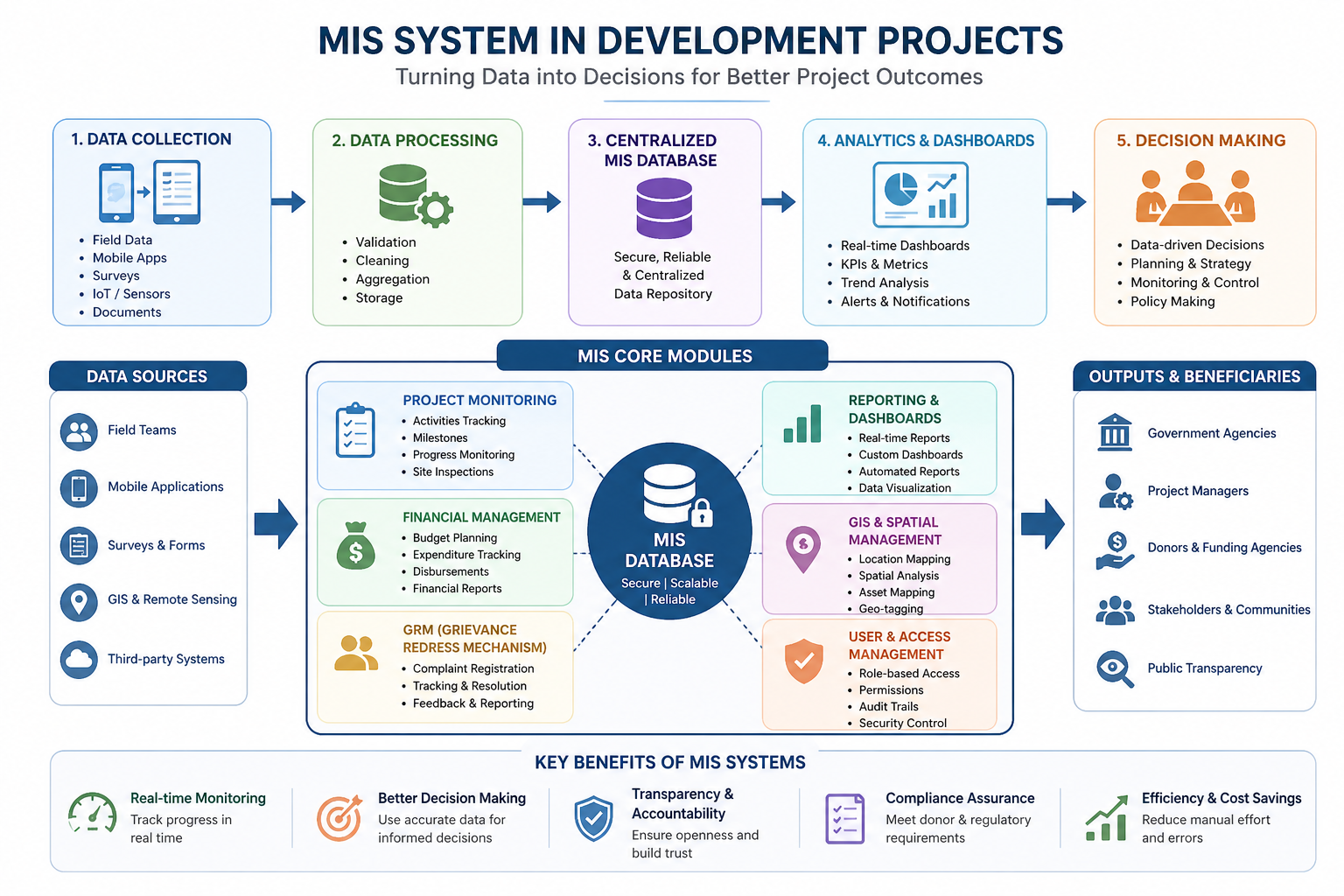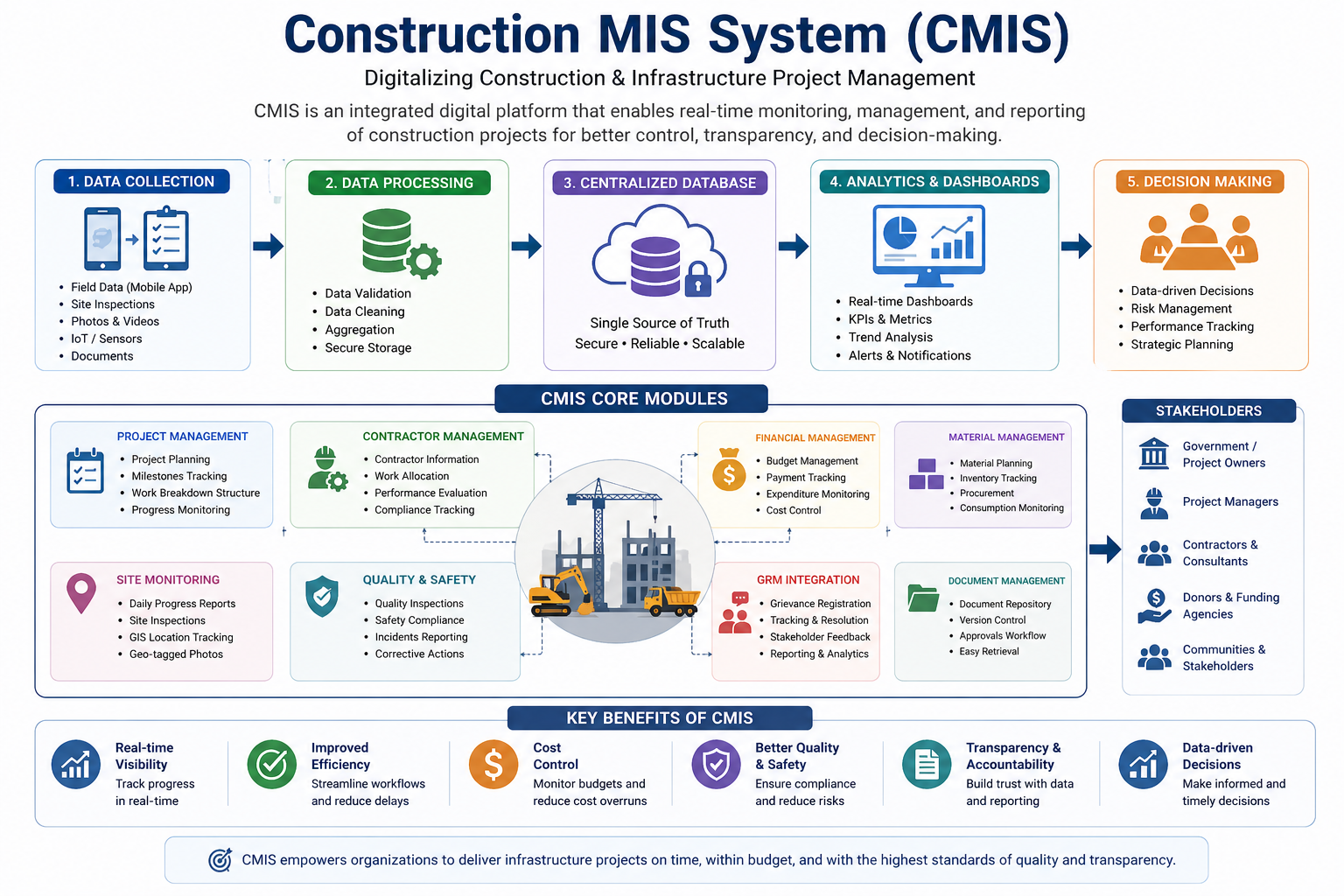
A Construction Management Information System (CMIS) is a specialized MIS platform designed to monitor, manage, and report construction and infrastructure project activities in real time.
In large-scale infrastructure projects, where multiple contractors, field teams, and stakeholders are involved, a CMIS ensures transparency, efficiency, and data-driven project control.
Simple Understanding: CMIS = Construction Data + Monitoring + Reporting + Decision Support
What is a Construction MIS System?
A Construction MIS System is a digital platform that centralizes all project-related data including site progress, contractor activities, financials, and reporting dashboards.
It enables project managers and government agencies to track progress in real time and make informed decisions based on accurate and up-to-date information.
Why CMIS is Essential for Infrastructure Projects
Infrastructure projects are complex and often suffer from delays, cost overruns, and lack of transparency. A CMIS system addresses these challenges by digitizing project monitoring.
Key Features of a Construction MIS System
1. Project Progress Monitoring
Tracks daily, weekly, and monthly construction activities across sites.
2. Contractor & Work Management
Manages contractor assignments, work packages, and performance tracking.
3. Financial Monitoring
Tracks budgets, payments, and project expenditures.
4. GIS & Location Tracking
Maps construction sites and enables geo-based monitoring.
5. GRM Integration
Handles grievances related to construction impacts and stakeholders.
Benefits of CMIS Systems
- Improved project visibility and control
- Reduced delays and cost overruns
- Better coordination between stakeholders
- Enhanced reporting and decision making
- Compliance with donor and regulatory requirements
Where CMIS Systems Are Used
- Road and highway projects
- Hydropower and energy infrastructure
- Urban development projects
- Public sector construction programs
Conclusion
A Construction MIS System is a critical tool for managing modern infrastructure projects. It enables real-time monitoring, improves transparency, and ensures projects are delivered efficiently and within budget.
Need a Construction MIS System?
We design scalable CMIS solutions for infrastructure and government projects.
View Construction MIS Solution