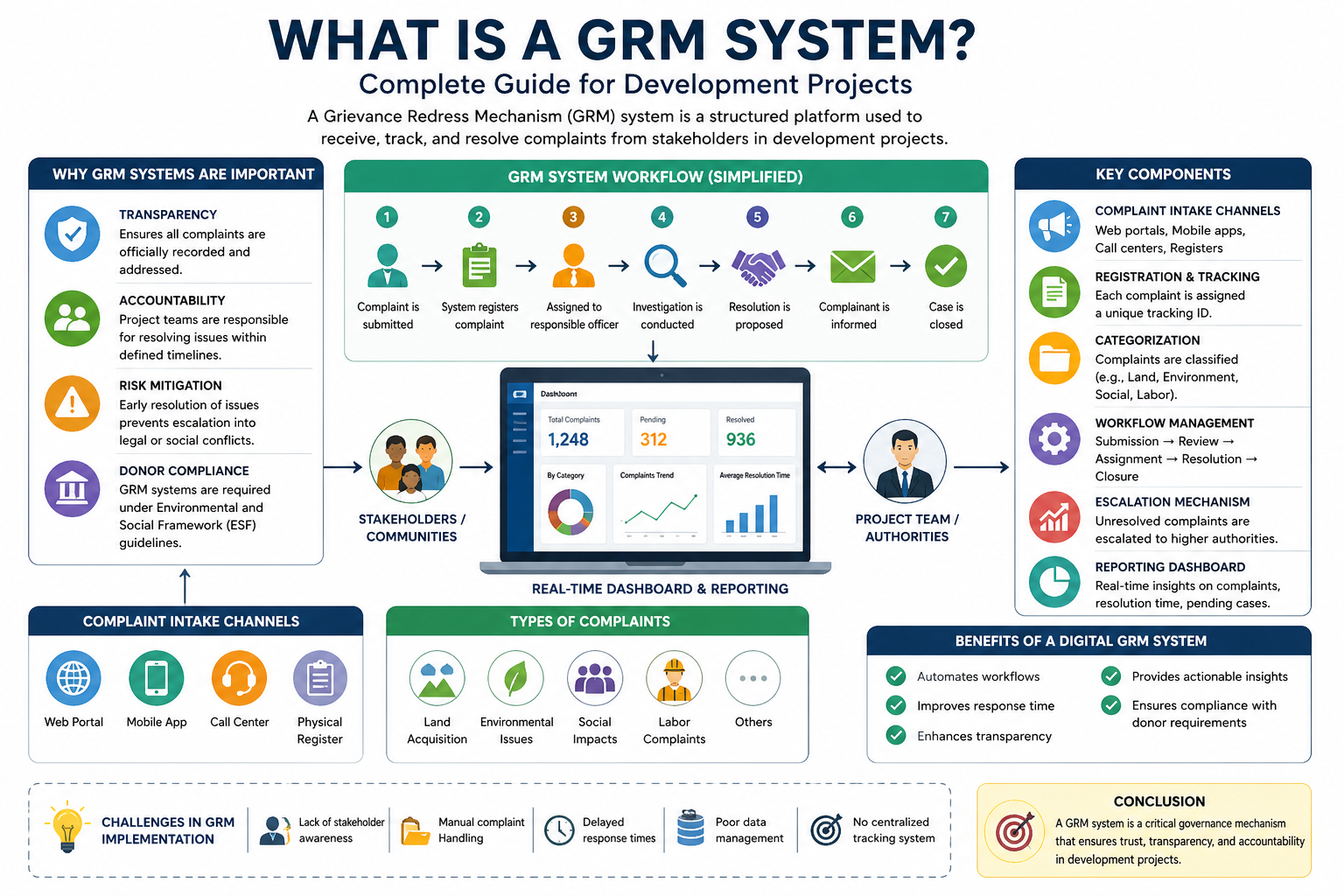
Banks across the United States, United Kingdom, and Europe operate in highly regulated environments where handling customer complaints efficiently is not just a service function—it is a compliance requirement. A modern complaint management system enables financial institutions to track, resolve, and audit complaints while meeting regulatory expectations from authorities such as CFPB (USA), FCA (UK), and PSD2/GDPR frameworks in Europe.
This comprehensive guide explains how complaint management systems work in banking, including workflows, compliance requirements, software platforms, and real-world implementation practices used by leading banks globally.
What is a Complaint Management System in Banking?
A complaint management system in banking is a centralized digital platform used to capture, categorize, track, investigate, and resolve customer complaints across multiple channels such as branches, mobile apps, and online banking portals. It ensures structured workflows, regulatory compliance, and full audit trails for every complaint.
Why Complaint Management Systems Are Critical for Banks
Regulatory Compliance
Banks in the US, UK, and EU must comply with strict complaint handling timelines and reporting requirements. Systems ensure adherence to regulatory standards and audit readiness.
Improved Customer Experience
Faster resolution, transparency, and structured communication significantly improve customer trust and retention.
Operational Efficiency
Automation reduces manual workload and enables banks to handle large complaint volumes efficiently.
Risk & Fraud Detection
Complaint trends often highlight systemic issues, fraud risks, or service failures early.
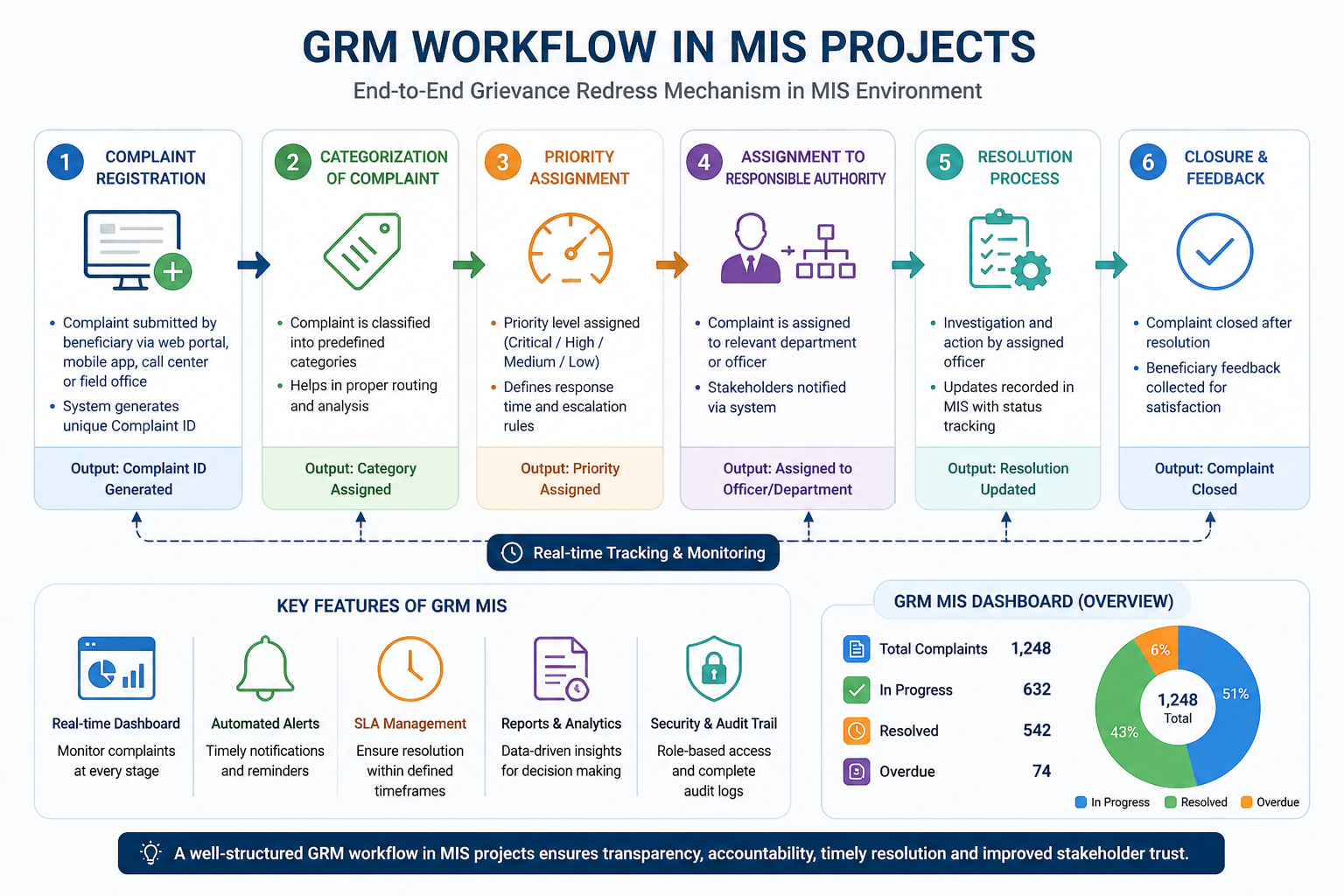
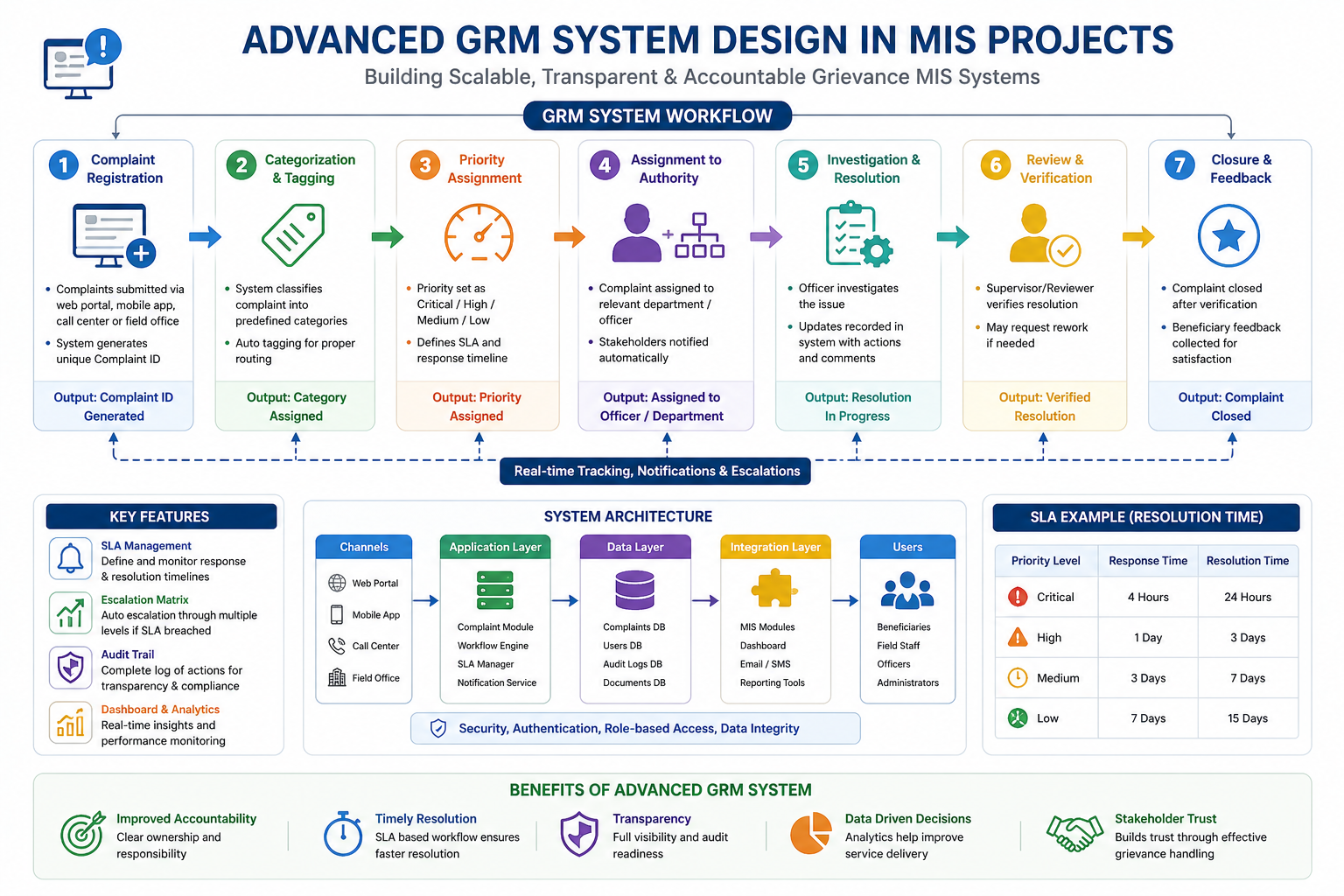
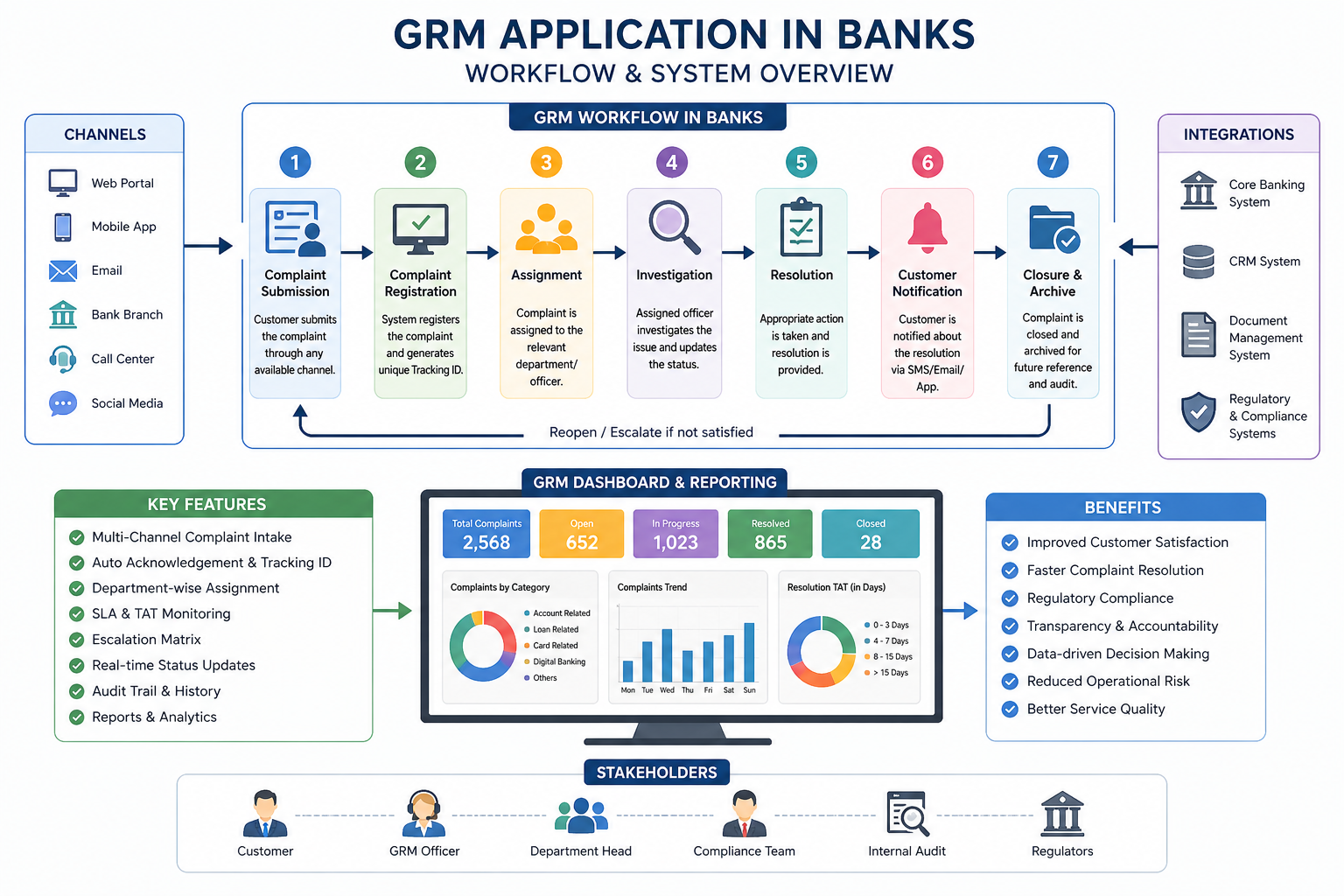
Bank Complaint Handling Process (Step-by-Step Workflow)
- Customer submits complaint via branch, website, or mobile app
- System logs complaint and assigns a unique tracking ID
- Complaint is categorized and routed automatically
- Investigation process begins with internal teams
- Resolution is approved based on findings
- Customer receives updates and final response
- Complaint is closed with full audit documentation
Complaint Resolution Timelines (US, UK, Europe)
- United States (CFPB): Typically 15 days
- United Kingdom (FCA): 3–8 weeks
- European Union: Varies under PSD2 & GDPR
- Australia (ASIC): 30 days
Key Features of Modern Banking Complaint Systems
- Multi-channel complaint intake (branch, mobile, web)
- Automated workflow and case routing
- Real-time tracking and dashboards
- Regulatory reporting and compliance tracking
- Audit trail and document management
- Analytics and complaint trend analysis
Popular Complaint Management Software Used by Banks
Real-World Implementation in Banking
In large retail banks, thousands of complaints are received monthly across different channels. Without a structured system, managing these complaints becomes inefficient and risky.
Modern complaint management platforms reduce resolution time by up to 40%, improve regulatory compliance, and enhance customer satisfaction metrics such as Net Promoter Score (NPS).
How to Choose the Right Complaint Management System
- Integration with core banking systems
- Automation capabilities
- Regulatory compliance features
- Scalability for high complaint volumes
- User-friendly interface
Challenges Without a Complaint System
- Delayed resolution and poor customer experience
- Regulatory penalties and compliance risks
- Lack of complaint visibility
- Inefficient manual processes
Frequently Asked Questions
What is a complaint management system in banking?
It is a centralized system used by banks to capture, track, and resolve customer complaints while ensuring compliance with financial regulations.
Why is complaint handling important?
It improves customer satisfaction, ensures regulatory compliance, and reduces operational risks in banking environments.
What tools do banks use?
Banks commonly use enterprise platforms such as Salesforce, Zendesk, and Microsoft Dynamics for complaint management.
How long does complaint resolution take?
Resolution timelines typically range from 3 to 15 business days depending on regulatory requirements and complaint complexity.