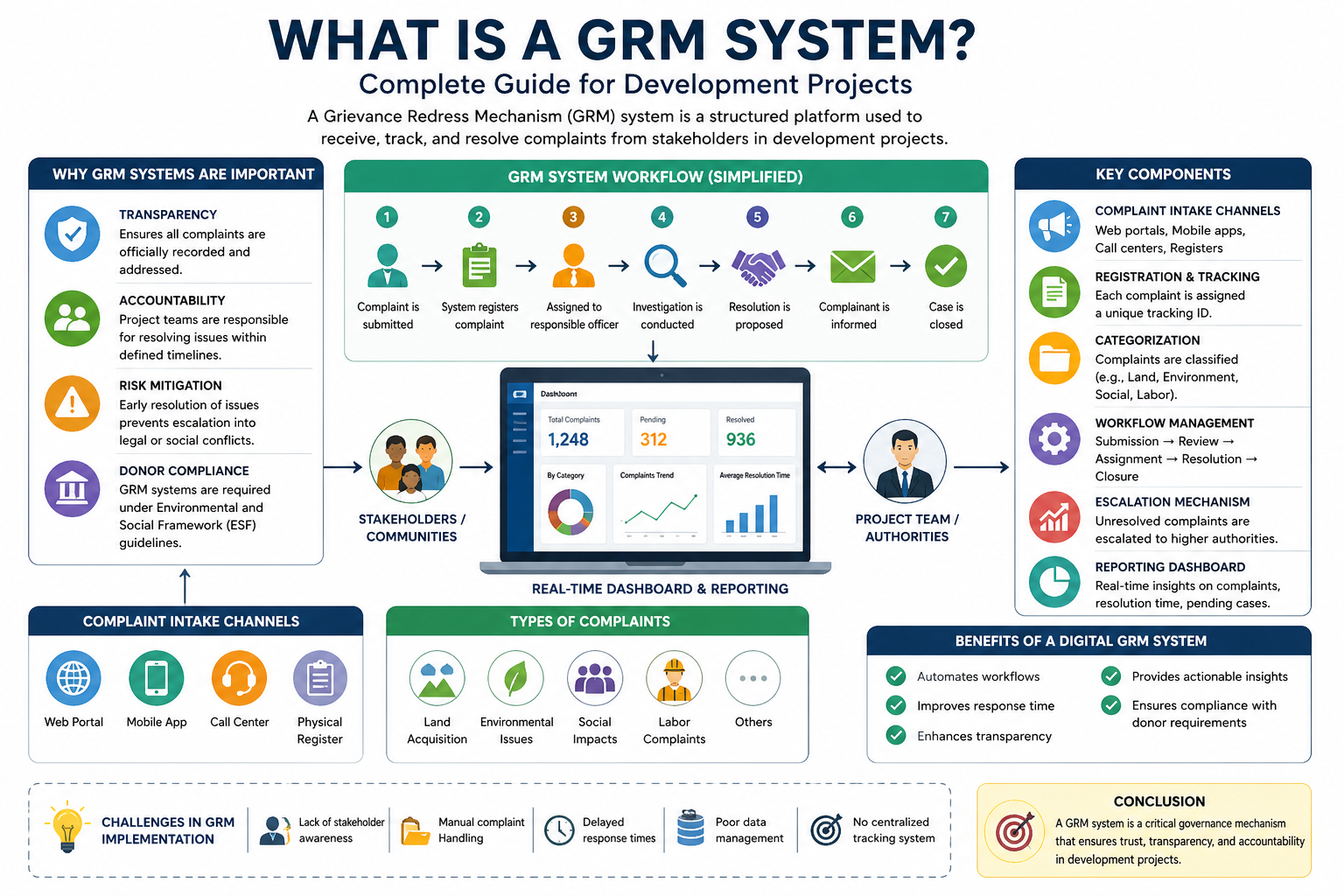
A GRM workflow (Grievance Redress Mechanism workflow) defines the step-by-step process used to receive, track, investigate, and resolve complaints in development and infrastructure projects.
In modern MIS systems, GRM workflows ensure accountability, transparency, and timely resolution through structured stages, automation, and SLA-based escalation.
Simple Explanation:
GRM Workflow = Complaint Intake → Registration → Investigation → Resolution → Closure
What is a GRM Workflow in MIS Projects?
A GRM workflow is a structured sequence of steps used to manage grievances within a Management Information System (MIS).
It ensures that every complaint moves through defined stages with clear responsibility, tracking, and compliance monitoring, making it essential for donor-funded and public sector programs.
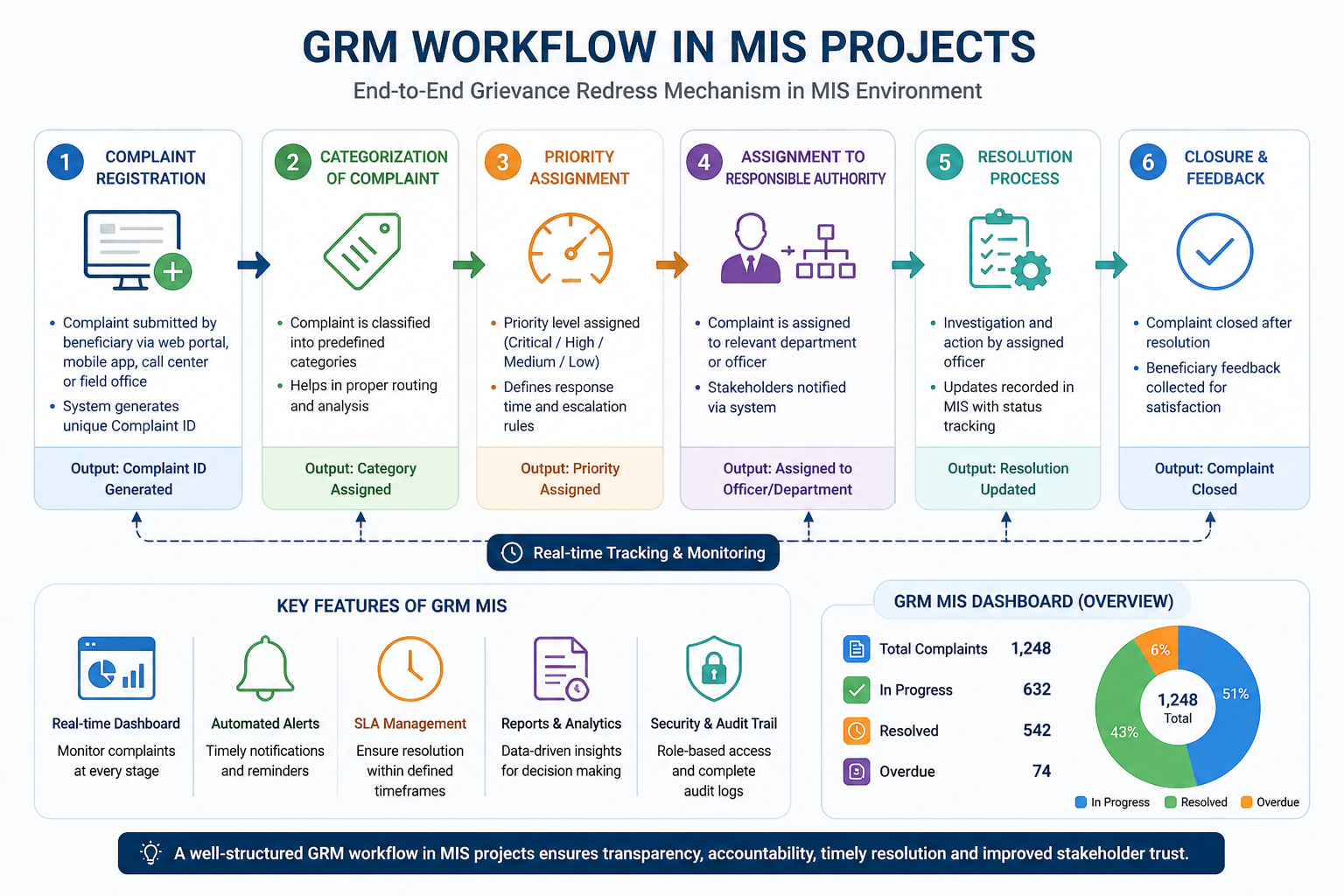
Standard GRM Workflow (Step-by-Step)
1. Complaint Intake
Complaints are received via web portals, mobile apps, call centers, or field offices.
2. Registration & Acknowledgement
The system logs the complaint and generates a unique tracking ID for monitoring.
3. Categorization & Assignment
Complaints are categorized (e.g., environmental, social, operational) and assigned to relevant teams.
4. Investigation & Verification
Teams verify the issue through field inspections, documentation, or stakeholder engagement.
5. Resolution
Corrective actions are implemented to address the complaint effectively.
6. Closure & Feedback
The complaint is closed after confirmation, and feedback is recorded for improvement.
Real-World Example: GRM Workflow in Infrastructure Projects
In a donor-funded infrastructure project, a community member reports dust pollution caused by construction.
- ✔ Complaint submitted via mobile app
- ✔ System generates tracking ID
- ✔ Categorized as environmental issue
- ✔ Assigned to field officer
- ✔ Site inspection conducted
- ✔ Contractor implements mitigation measures
- ✔ Complaint resolved and closed
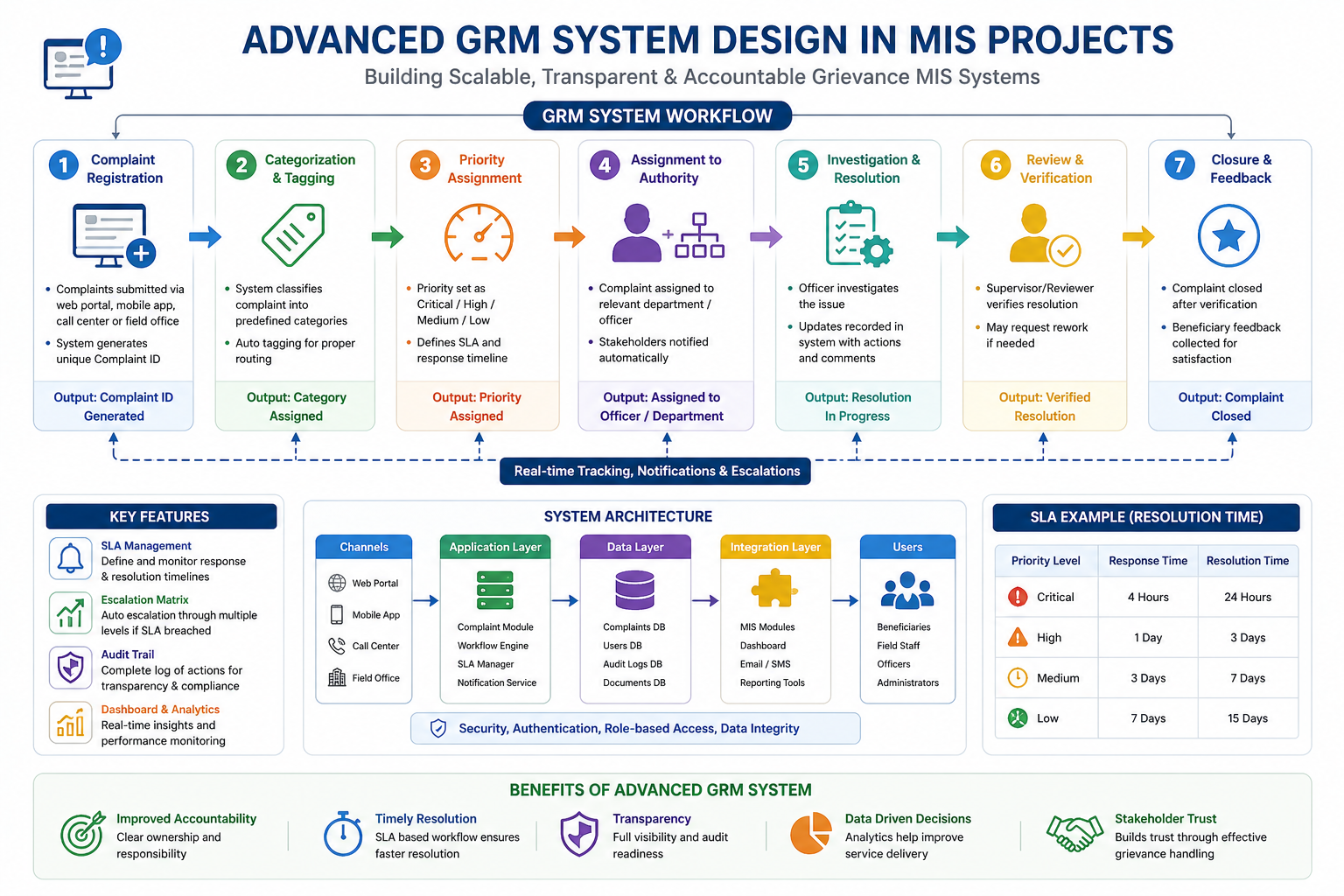
GRM Workflow in MIS Architecture
System Flow:
• Frontend → Complaint submission interface
• Backend → Workflow engine & APIs
• Database → Complaint records & logs
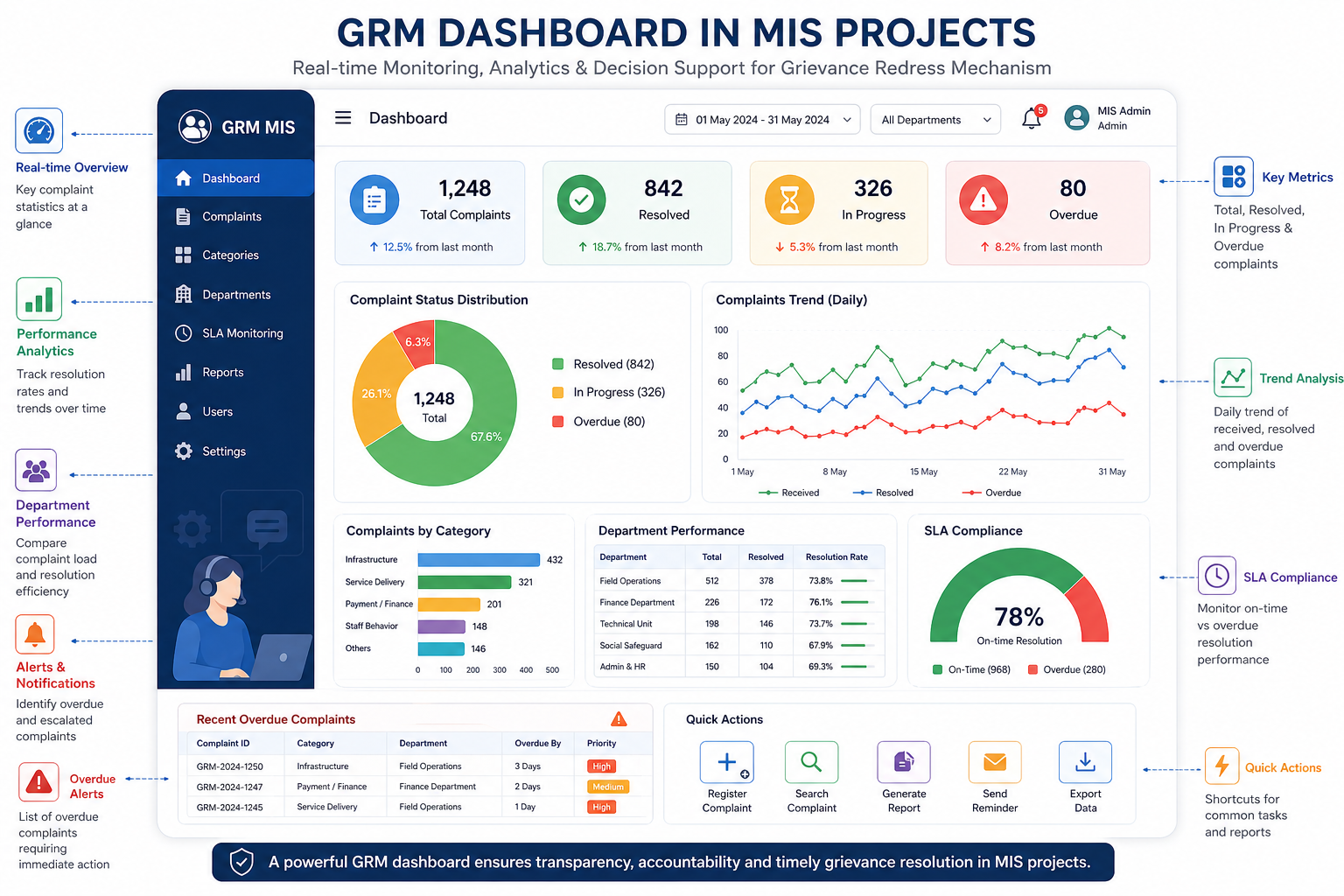
• Dashboard → Monitoring & analytics
Advanced GRM Workflow Features
Why GRM Workflow is Important
- Ensures structured complaint handling
- Improves transparency and accountability
- Reduces delays and inefficiencies
- Supports donor compliance and audits
- Enhances stakeholder trust
Related GRM Guides
Need a GRM Workflow System for Your Project?
Explore a real-world GRM MIS system designed for donor-funded infrastructure projects.
View GRM System