What is an Advanced GRM System?
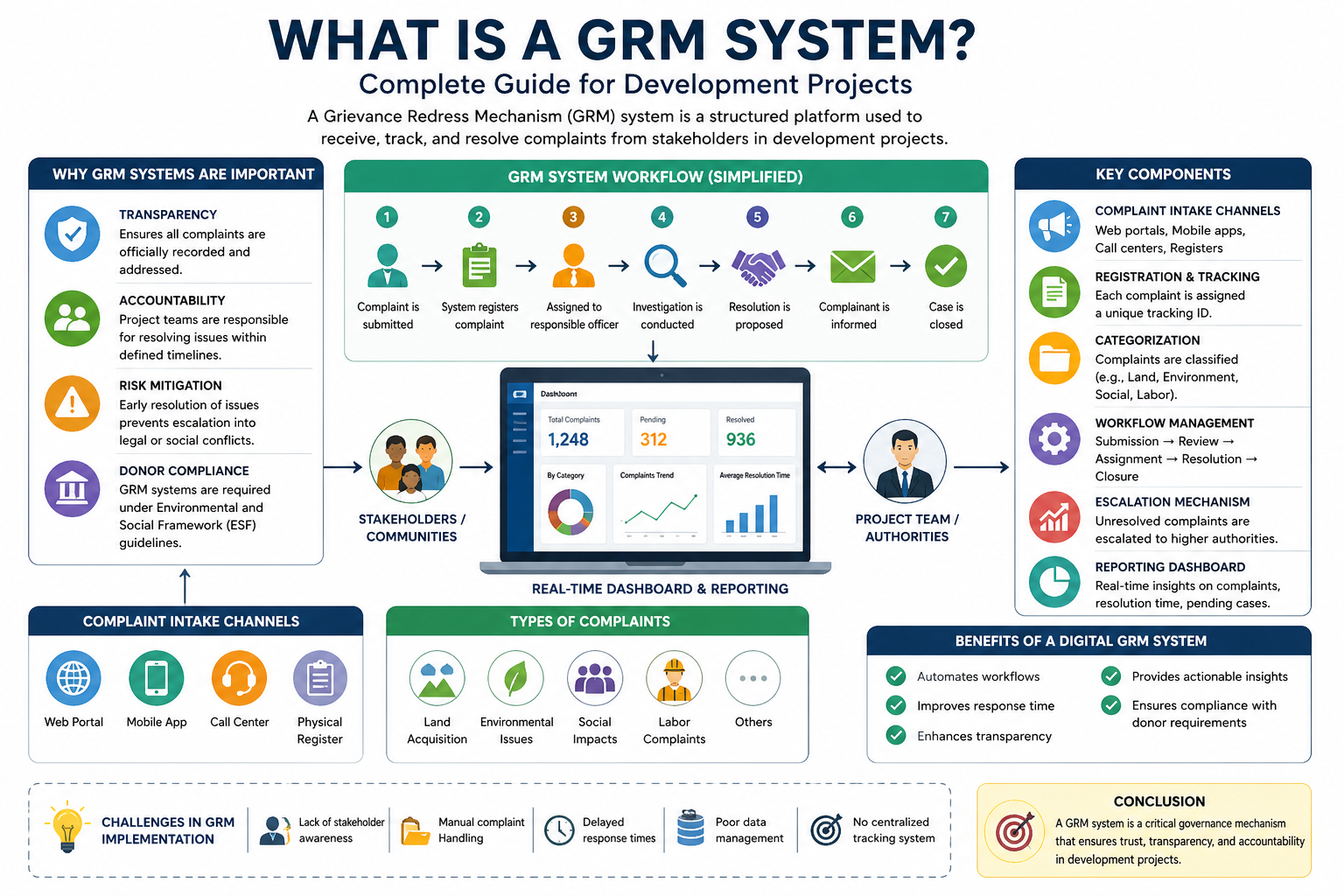
An advanced GRM system is an enterprise complaint management platform that automates grievance workflows, enforces SLA timelines, enables escalation, and provides real-time dashboards for monitoring and decision-making in large-scale projects.
An advanced GRM system (Grievance Redress Mechanism) is not just a complaint tool—it is a fully integrated workflow and governance system designed for infrastructure, government, and donor-funded projects.
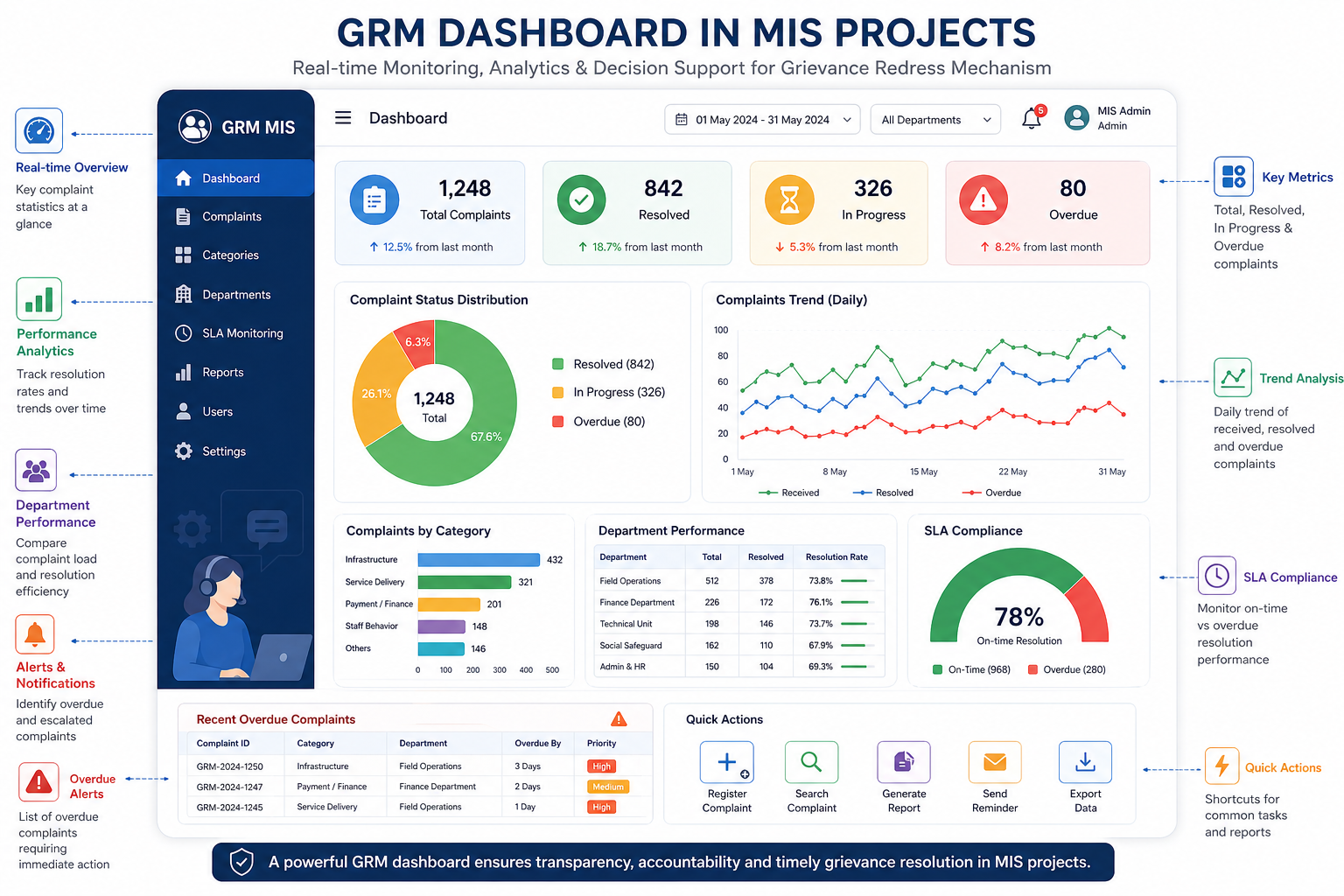
Modern GRM platforms combine workflow automation, SLA tracking, escalation logic, and real-time analytics to ensure transparency, accountability, and faster decision-making.
Within a Management Information System (MIS) , GRM acts as a central compliance and monitoring module connecting field operations with management dashboards.
Core Concept:
Advanced GRM = Workflow Automation + SLA Control + Data Intelligence + Compliance + Decision Support
How an Advanced GRM System Works
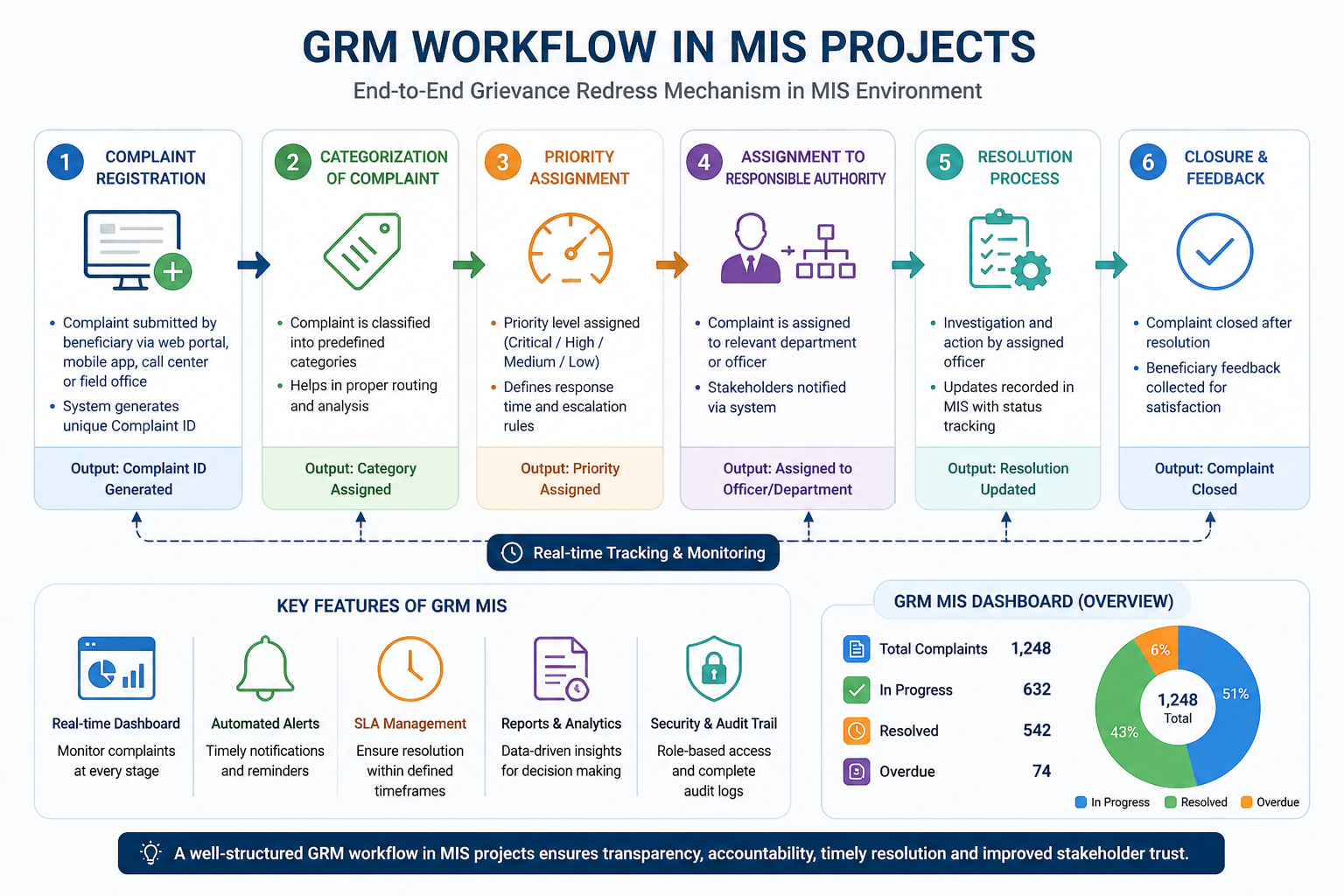
- Complaint is submitted via web, mobile, or call center
- System generates tracking ID and assigns responsibility
- Complaint is categorized and prioritized
- Investigation and verification are conducted
- Resolution is implemented within SLA timelines
- Feedback is recorded and case is closed
What is Advanced GRM System Design?
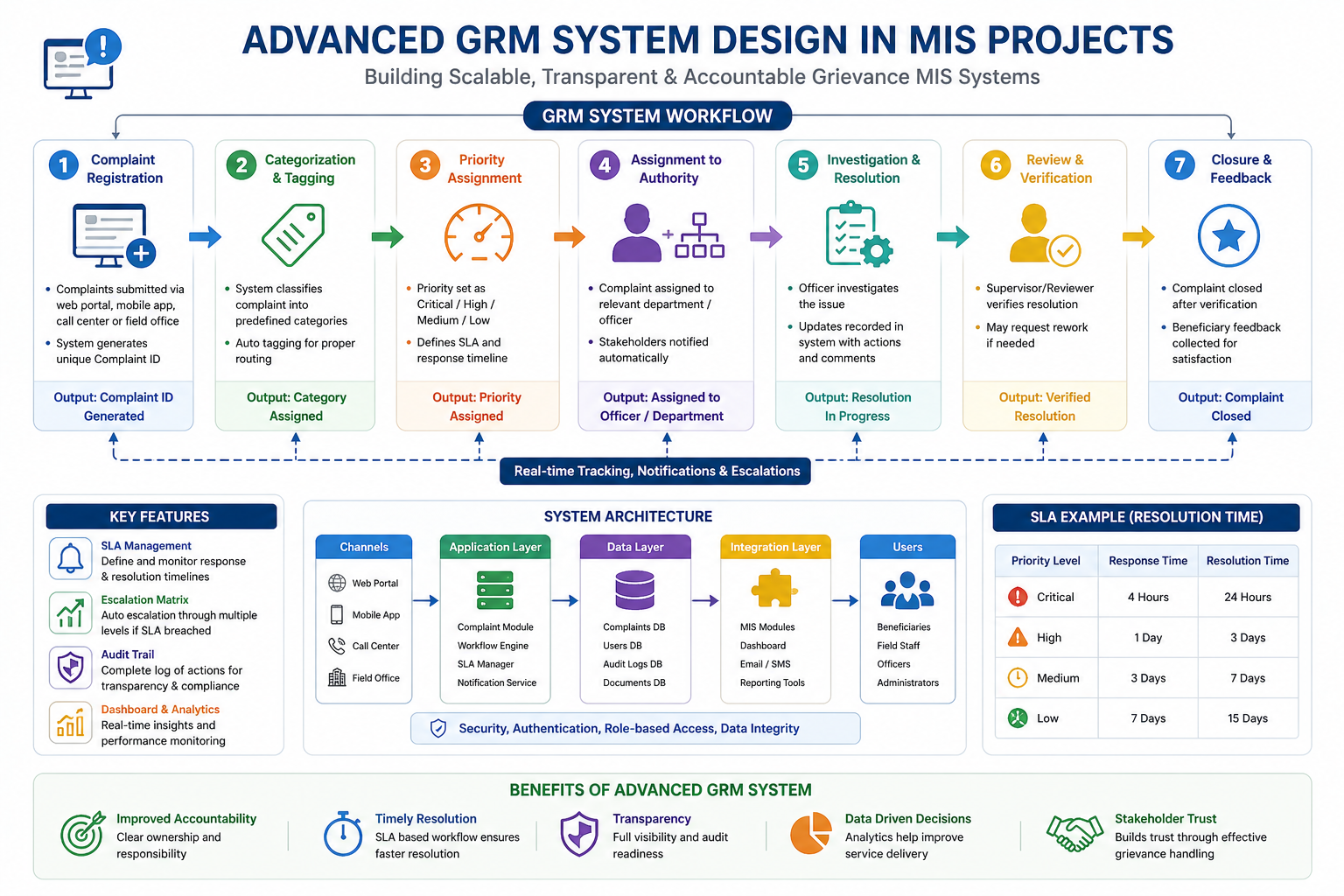
Advanced GRM system design refers to building a digital grievance platform that manages the entire complaint lifecycle using automation, role-based workflows, and analytics.
These systems go beyond basic tracking by incorporating SLA enforcement, escalation mechanisms, audit logs, and dashboards, making them essential for enterprise and donor-funded projects.
Core Components of an Enterprise GRM System
Multi-Channel Intake
Capture complaints via web, mobile apps, call centers, and field offices.
Workflow Automation
Automates complaint lifecycle from submission to closure.
Categorization Engine
Classifies complaints for routing and reporting.
SLA & Escalation
Ensures time-bound resolution with escalation rules.
Audit & Compliance Logs
Tracks all actions for transparency and audits.
GRM System Architecture
Advanced Features
Looking for GRM Templates or Forms?
Explore practical GRM applications and complaint formats used in banking and development projects.
Frequently Asked Questions
What is an advanced GRM system?
A system that automates complaint workflows with SLA tracking, escalation, and analytics.
Is GRM part of MIS?
Yes, GRM is a key module within MIS for complaint management.
Why are GRM systems important?
They ensure transparency, accountability, and compliance in large projects.
Need an Enterprise GRM System?
We design scalable GRM systems for governments, NGOs, and infrastructure projects worldwide.
Explore GRM Solutions